Car Leasing in Sri Lanka: Interest Rates and Monthly Payment Tips
Quick answer: Securing car leasing in Sri Lanka involves choosing between fixed and floating interest rates, typically ranging from 12% to 18% per annum as of 2026. Financial institutions finance up to 70% of a vehicle's valuation, requiring a 30% down payment, with repayment terms stretching from three to seven years.
Navigating car leasing in Sri Lanka requires a clear understanding of financial regulations, prevailing interest rates, and vehicle valuation guidelines set by the Central Bank of Sri Lanka. As of 2026, most buyers financing a brand-new Japanese crossover like a Toyota Raize or a reconditioned Suzuki Alto turn to commercial banks and registered finance companies. Understanding how monthly installments are calculated helps you budget effectively while avoiding hidden administrative charges during the vehicle purchasing process across local dealerships.
Securing a vehicle lease in Sri Lanka is the most common path to car ownership for both personal commuters in Colombo and commercial transport operators in Kandy. Before signing any lease agreement, buyers must evaluate maximum Loan-to-Value ratios, total interest costs, and mandatory comprehensive insurance packages. This guide covers current interest rate structures, step-by-step application procedures, calculation methods, and smart financial strategies to help you secure the best possible terms for your next vehicle purchase.
Key Takeaways
- Central Bank regulations limit maximum vehicle leasing to 70% of total market valuation.
- Interest rates for vehicle leases currently range between 12% and 18% per annum in 2026.
- Lease tenures typically span from 3 to 7 years depending on the vehicle's manufacturing year.
- Comprehensive insurance is mandatory and can often be bundled directly into monthly lease payments.
- Comparing fixed and floating interest rates prevents unexpected payment increases during economic shifts.
Understanding Interest Rates for Car Leasing in Sri Lanka
When exploring options for car leasing in Sri Lanka, understanding how interest rates are calculated is essential for long-term financial planning. Financial institutions offer both fixed and floating interest rate packages tailored to different borrower profiles. As of 2026, fixed rates provide predictability with stable monthly installments throughout the tenure, whereas floating rates fluctuate according to market benchmarks like the Average Weighted Prime Lending Rate published periodically by the Central Bank.
The overall cost of your lease depends heavily on whether you choose a commercial bank or a specialized finance company in Sri Lanka. Banks generally offer lower interest rates around 12% to 15% but impose strict income verification and paperwork requirements. Finance companies usually charge slightly higher rates between 15% and 18% annually, but they process applications much faster and offer flexible documentation criteria for self-employed individuals and small business owners in regional towns.
The table below outlines average vehicle lease interest rates and maximum financing limits offered by major Sri Lankan financial institutions as of 2026.
| Institution Type | Average Interest Rate | Maximum Financing (LTV) | Typical Tenure | Processing Time |
|---|---|---|---|---|
| Commercial Banks | 12.0% - 15.0% | Up to 70% Valuation | 3 to 7 Years | 5 to 10 Working Days |
| Specialized Finance Companies | 15.0% - 18.0% | Up to 70% Valuation | 3 to 6 Years | 2 to 4 Working Days |
| Microfinance Institutions | 18.0% - 22.0% | Up to 50% Valuation | 1 to 3 Years | 1 to 2 Working Days |
| EV Special Green Leases | 11.0% - 13.5% | Up to 80% Valuation | 3 to 7 Years | 3 to 7 Working Days |
Central Bank Regulations and Down Payment Guidelines
Vehicle financing rules in Sri Lanka are strictly regulated by the Central Bank to maintain financial market stability and control credit growth. Under current Loan-to-Value restrictions, financial institutions can finance a maximum of 70% of the vehicle's official valuation for petrol and diesel passenger cars. This rule means buyers must raise a minimum 30% cash down payment before the financial institution disburses the lease funds to the seller.
For reconditioned Japanese imports such as a Honda Fit or a Nissan Note bought from registered importers in Galle or Kurunegala, the lease amount is calculated based on an accredited professional valuation rather than the seller's asking price. If a valuer assesses a car at LKR 8,000,000 while the dealer quotes LKR 8,500,000, the bank will only lend 70% of the LKR 8,000,000 figure, requiring the buyer to cover the remaining gap.
Special Regulations for Electric Vehicles
Electric vehicles benefit from higher financing limits in Sri Lanka as part of government environmental initiatives. Buyers purchasing brand-new electric cars like the BYD Atto 3 can access financing up to 80% of the vehicle's market value, reducing the upfront cash deposit requirement to just 20% for qualified applicants.
Commercial Vehicle Rules
Commercial vehicles, including light trucks and dual-purpose vans used for logistics along the Southern Expressway, fall under separate credit guidelines. Certain commercial vehicles qualify for up to 80% or 90% financing, enabling small business owners in Sri Lanka to expand their fleets with lower initial capital outlay.
How to Calculate Your Monthly Lease Installments
Calculating your monthly lease payment involves factoring in the total vehicle price, your down payment, the agreed interest rate, and the chosen repayment tenure. Financial institutions in Sri Lanka utilize an equated monthly installment formula that balances principal repayment and interest charges. Additionally, buyers must budget for annual professional valuation fees, lease agreement registration charges, stamp duties, and mandatory full-option comprehensive insurance coverage added to the principal balance.
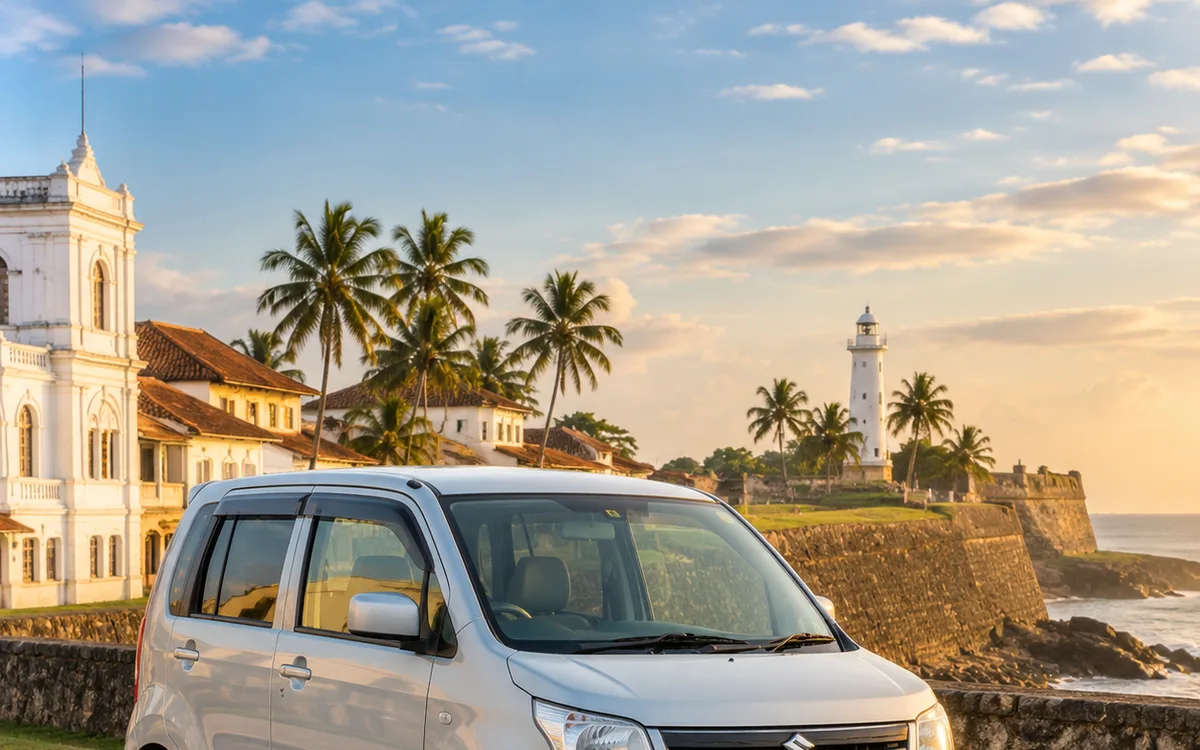
To illustrate, suppose you wish to buy a registered Suzuki Wagon R priced at LKR 6,000,000 using a bank lease. With a 30% down payment of LKR 1,800,000, the required loan amount is LKR 4,200,000. At a fixed annual interest rate of 14% over a five-year tenure, your base monthly installment will be approximately LKR 97,800, excluding additional monthly insurance charges bundled into the contract.
Follow these practical tips to manage and lower your monthly vehicle lease payments effectively:
- Increase your initial down payment beyond the mandatory 30% to significantly reduce total monthly interest charges.
- Opt for a longer lease tenure like 5 or 6 years to lower monthly commitments, though total interest paid increases.
- Negotiate comprehensive insurance policies directly with insurers to secure lower annual premiums before bundling.
- Maintain a strong credit score on the Credit Information Bureau of Sri Lanka to qualify for preferential interest rates.
- Avoid late payment penalties by setting up automatic standing orders with your primary salary bank account.
Step-by-Step Guide to Applying for a Car Lease
Applying for a vehicle lease in Sri Lanka is a structured process that requires presenting comprehensive financial and vehicle documentation. Whether you are buying a brand-new car from an authorized distributor in Colombo or a second-hand vehicle through online classifieds, completing preparation steps beforehand ensures swift credit approval. Proper preparation prevents unnecessary delays when securing your desired car from competitive local markets.
Before submitting your credit application, verify that your total monthly debt obligations, including existing personal loans and credit cards, do not exceed 50% to 60% of your net monthly income. Lenders assess your disposable income carefully to ensure you can comfortably handle the new lease commitment alongside regular household living expenses in urban centres like Dehiwala and Maharagama.
Complete these seven sequential steps to secure a car lease approval in Sri Lanka efficiently:
- Select your desired vehicle from a registered dealer or private seller and obtain a formal sales quotation or agreement.
- Obtain an official valuation report from a bank-approved professional vehicle valuer for used or reconditioned vehicles.
- Gather personal documentation, including your National Identity Card, proof of address, and recent utility bills.
- Collect income proof documents, such as three months of salary slips, six months of bank statements, or audited business accounts.
- Submit the completed lease application form along with all required supporting documentation to your chosen lender.
- Await credit committee evaluation and sign the formal lease agreement letter detailing interest rates and repayment schedules upon approval.
- Pay your cash down payment to the seller while the leasing company disburses the balance directly to finalize ownership transfer.
Comparing Reconditioned Imports vs Local Registered Vehicles
Choosing between an un-registered reconditioned Japanese import and a locally registered used car significantly impacts your leasing options in Sri Lanka. Reconditioned imports freshly cleared through the Hambantota Port usually command higher valuations and lower interest rates because banks consider them higher-value collateral. They also qualify for maximum leasing tenures of five to seven years due to their recent manufacturing dates.
Conversely, locally registered older vehicles like a 2012 Toyota Premio carry shorter maximum lease tenures, usually capped at three to four years by financial institutions. Lenders restrict loan terms on older vehicles due to depreciation risks and potential mechanical wear. Consequently, monthly installments on older registered cars can sometimes be higher than expected because the total principal amount must be repaid over a compressed timeframe.
Impact of Vehicle Depreciation on Leasing Terms
Vehicle depreciation directly influences how leasing companies evaluate risk in Sri Lanka. Japanese models like the Toyota Vitz and Honda Vezel maintain high resale value on local platforms, allowing financial institutions to offer competitive interest rates and flexible repayment schedules due to low collateral risk.
Essential Clauses in Sri Lankan Lease Agreements
Before signing a binding lease agreement in Sri Lanka, buyers must carefully read all terms and conditions beyond the advertised interest rate. Pay close attention to early settlement penalty clauses, which outline extra charges if you decide to pay off your lease ahead of schedule. Most institutions charge a termination fee ranging between 2% and 5% of the remaining principal balance.
Additionally, review default clauses and grace periods for missed monthly installments during financial emergencies. Understanding repossession policies and late payment interest rates protects you from severe financial hardship if unexpected disruptions affect your income. Always clarify whether insurance renewals must be processed through the leasing institution or if you retain the freedom to source competitive quotes independently.
Frequently Asked Questions
Find answers to frequently asked questions about securing and managing vehicle leases in Sri Lanka.
What is the maximum loan percentage for car leasing in Sri Lanka?
Under current Central Bank rules in Sri Lanka, financial institutions can finance up to 70% of a petrol or diesel vehicle's valuation, requiring a 30% down payment. Electric vehicles qualify for up to 80% financing.
Can I lease a used car bought from a private seller on classifieds?
Yes, you can lease a used vehicle bought from a private seller in Sri Lanka. The financial institution will require an official valuation from an approved professional valuer before approving and disbursing loan funds.
What happens if I settle my car lease before the agreed tenure ends?
Early settlement allows you to save on future interest charges, but most Sri Lankan leasing companies charge a rebate fee or early termination penalty, typically between 2% and 5% of the outstanding principal.
Is full option comprehensive insurance mandatory for leased cars?
Yes, comprehensive insurance is mandatory for all leased vehicles in Sri Lanka throughout the lease tenure. The policy protects the lender's financial interest in the vehicle and can be bundled into monthly installments.
What documents are required to apply for a car lease in Sri Lanka?
Applicants must provide their National Identity Card, recent utility bills, three months of salary slips, six months of bank statements, a formal sales quotation, and an approved vehicle valuation report for used cars.
Final Advice for Vehicle Financing in Sri Lanka
Securing the right lease agreement in Sri Lanka requires balancing competitive interest rates, manageable monthly installments, and favorable contract conditions. By carefully calculating your total budget, preparing necessary documentation early, and comparing bank offers against specialized finance companies, you can acquire your ideal vehicle without putting unnecessary strain on your personal finances.
Always remember to factor in additional ownership expenses like regular maintenance, fuel costs, annual revenue license fees, and comprehensive insurance alongside your monthly installment. Taking a disciplined financial approach ensures a smooth car purchasing experience, whether you commute daily through Colombo traffic or travel long distances across the island.

CarBari
FounderSure there isn't anything embarrassing hden in the middle of text. All repeat predefined chunks as the as necessliary, making this the first 200 our asliatin words, combined with a handful.<p><a href="https://kasgraph.com/">kasgraph.com</a></p>